
Affiliate Disclosure: GeneratorIntel is part of the Amazon Services LLC Associates Program and earns a commission from qualifying purchases made through our links, at no additional cost to you. Our product recommendations are based on specifications, performance, and value, not influenced by commission rates.
Top Portable Generators for CPAP Machines: Quiet & Dependable
To power a CPAP machine with a generator is more complex than merely plugging it into any outlet. These machines include sensitive microprocessors and pressure regulators that necessitate pure sine wave electricity, akin to what you get from your home's wall sockets. Connecting to a standard open-frame generator that outputs unstable modified sine wave power can lead to inconsistent air pressure, damage the motor, and void warranties.
The answer lies in an inverter generator, which ensures Total Harmonic Distortion (THD) remains below 3%, matching grid electricity standards. Coupled with low noise levels for uninterrupted sleep, these models are specifically suitable for powering sleep apnea devices.
This guide explores four proven choices from 2026, ranging from a whisper-quiet battery power station perfect for tent camping to a versatile dual-fuel inverter generator capable of running your entire RV overnight. Each suggestion guarantees pure sine wave power that is safe for CPAP, BiPAP, and APAP machines.
Quick Picks: Top CPAP Generators 2026
| Model | Type | Power Output | Noise Level | CPAP Runtime | Best For |
|---|---|---|---|---|---|
| Honda EU2200i | Inverter Generator | Rated at 1800W | 48 dB | Over 8 hours per tank | All-around use, camping, power outages |
| Jackery Explorer 1000 V2 | Battery Power Station | AC output: 1500W | Silent operation | Between 14 to 17 hours | Indoor use, tent camping, quiet operation |
| WEN 56225i | Inverter Generator | Rated at 1800W | 53 dB | Over 10 hours per tank | Budget choice, occasional use |
| WEN 56200i | Inverter Generator | Rated at 1600W | 51 dB | Over 9 hours per tank | The lightest gas option, minimal load |
| Westinghouse iGen4500DF | Dual-Fuel Inverter | Rated at 3700W | 52 dB | Over 18 hours per tank | RV use, CPAP plus additional load |
Understanding CPAP Power Requirements: What the Numbers Indicate
Before investing in a generator, it's crucial to understand your CPAP machine's power consumption:
- Standard CPAP without humidifier: Consumes between 30 and 60 watts at operational pressure.
- CPAP with heated humidifier (medium setting): Draws around 80 to 120 watts.
- CPAP with heated humidifier (maximum): Requires 150 to 200 watts.
- BiPAP machine without humidifier: Needs approximately 40 to 80 watts.
- BiPAP with humidifier: Uses between 100 and 180 watts.
Your CPAP's power adapter label will display the maximum input wattage. For instance, modern ResMed AirSense 11 units are rated up to 90W, while the Philips DreamStation 2 is listed at 65W. These figures represent peak consumption; actual usage during a typical sleep night can be around 30 to 50% lower.
To estimate power needs for an entire 8-hour sleep cycle: (average wattage) x 8 hours = minimum required watt-hours. For example, a CPAP with humidifier drawing 60W would need about 480Wh per night. The Jackery Explorer 1000 V2 has a capacity of 1070Wh - sufficient for two full nights plus some extra power.
The Importance of Inverter Power in CPAP Machines
CPAP devices are sophisticated medical instruments controlled by microprocessors. They continuously monitor pressure, regulate airflow, and log therapy data using internal circuits that need a stable and clean power source. The quality of this electrical input is measured by Total Harmonic Distortion (THD):
- Less than 3% THD - Comparable to utility-supplied electricity, ensuring safety for all medical equipment
- Between 3 and 6% THD - Suboptimal; may lead to overheating in devices using transformers
- Above 6% THD - Can cause long-term damage to sensitive electronic components
Traditional open-frame generators typically generate between 6 and 25% THD. In contrast, each inverter generator featured here produces less than 3% THD, aligning with the electrical specifications your CPAP machine was engineered for.

Choosing the Right Wattage: Avoid Overinvestment
A frequent error is purchasing a 3500W generator solely to power a CPAP device that only needs 60W. Oversizing not only wastes fuel but also adds extra weight and noise without offering any additional advantages for such low-power devices. Proper sizing considerations include:
- CPAP unit alone (without humidifier): Any generator over 1000W will provide more than sufficient power, exceeding needs by 15 times.
- CPAP with humidifier attached: A minimum of 500W is advised, though a 1000W model ensures reliable operation during startup.
- CPAP alongside additional devices (like a fan, lights, or phone charger): Between 1600 and 2000W will comfortably handle all simultaneous power demands.
- CPAP plus an RV air conditioner: A minimum of 3500W is required to manage the initial surge during AC startup, followed by a reduction in power demand.
The 1800W category (such as the Honda EU2200i and WEN 56225i models) strikes an optimal balance for most CPAP users: it offers enough capacity to support a CPAP machine along with typical overnight accessories without the unnecessary size, noise level, or fuel usage of more powerful units. The lighter 1600W WEN 56200i is suitable for backpackers who require minimal load power.
The Honda EU2200i: A Preferred Choice for CPAP Users
When CPAP professionals and respiratory therapists are asked about reliable backup power options, they often point to the Honda EU2200i. This recommendation is backed by three key factors:
Power quality: Utilizing Honda’s exclusive inverter technology, the EU2200i delivers under 3% THD, aligning perfectly with grid power standards. Extensive clinical evaluations have confirmed its compatibility and safety for leading CPAP devices such as ResMed, Philips Respironics, Fisher and Paykel, and DeVilbiss.
Noise: Operating at only 48 dB under quarter load, the EU2200i is quieter than an average refrigerator. Given that a typical 60W CPAP system uses about 3.3% of its rated capacity, the generator operates almost silently during overnight use, posing minimal disturbance to others in close proximity.
Runtime: With a specified runtime of 8.1 hours at 25% load (450W), running a CPAP device within the range of 60 to 100W translates into 3 to 5% of its total capacity, well below the 25% benchmark. Users can anticipate around 10 to 12 hours of continuous operation per tank when solely powering a CPAP.
Key specifications:
- Peak output: 2200W (starting) / 1800W (running)
- Total Harmonic Distortion (THD): Under 3% (pure sine wave)
- Noise level: 48 dB at quarter load, 57 dB at full capacity
- Runtime: 8.1 hours at 25% load with a 0.95-gallon fuel tank
- Engine: Honda GXR120 (121cc, 4-stroke OHV)
- Weight: 47.4 pounds
- Warranty: 3-year residential warranty
Parallel capability: Two EU2200i units can be linked via Honda’s optional parallel cable to achieve a combined output of 3600W. This setup allows for powering both CPAP and RV air conditioning using two quiet, portable generators rather than one large, noisy conventional generator.
Who should purchase it: Individuals who frequently camp with their CPAP devices (more than ten nights per year), those living in areas prone to extended power outages due to severe weather or unreliable grid infrastructure, and anyone for whom CPAP therapy is critical and cannot afford the risk of equipment damage from substandard power sources. Although more expensive than budget options, it safeguards medical devices that can cost between $700 and
Affiliate Disclosure: GeneratorIntel participates in the Amazon Services LLC Associates Program. We earn commissions from qualifying purchases through our Amazon links at no extra cost to you. We recommend products based on specifications, performance, and value, not commission rates.
Best Portable Generator for CPAP Machine: Silent & Reliable
Running a CPAP machine off a generator is not as simple as plugging into any available outlet. CPAP machines contain precision microprocessors and pressure regulators that require pure sine wave power - the same clean electrical signal you get from a wall outlet at home. Plug into a conventional open-frame generator producing dirty modified sine wave power, and you risk inconsistent pressure delivery, motor degradation, and a voided manufacturer warranty.
The solution is an inverter generator, which produces Total Harmonic Distortion (THD) under 3% - equivalent to grid power. Combined with quiet operation (most CPAP users need the generator running while they sleep), inverter models are the only appropriate generator class for sleep apnea equipment.
This guide covers four verified options for 2026, ranging from a silent battery power station ideal for tent camping to a dual-fuel inverter generator that can power your entire RV overnight. Every recommendation produces pure sine wave power verified safe for CPAP, BiPAP, and APAP machines.
Quick Picks: Best CPAP Generators 2026
| Model | Type | Power Output | Noise Level | CPAP Runtime | Best For |
|---|---|---|---|---|---|
| Honda EU2200i | Inverter Generator | 1800W rated | 48 dB | 8+ hours per tank | Best overall, camping, outages |
| Jackery Explorer 1000 V2 | Battery Power Station | 1500W AC | Silent | 14-17 hours | Indoor use, tent camping, silent operation |
| WEN 56225i | Inverter Generator | 1800W rated | 53 dB | 10+ hours per tank | Budget pick, occasional use |
| WEN 56200i | Inverter Generator | 1600W rated | 51 dB | 9+ hours per tank | Lightest gas option, minimal load |
| Westinghouse iGen4500DF | Dual-Fuel Inverter | 3700W rated | 52 dB | 18+ hours per tank | RV use, CPAP plus full load |
CPAP Power Needs: What the Specs Actually Mean
Before buying a generator, understand exactly what your CPAP machine draws:
- Standard CPAP without humidifier: 30 to 60 watts at operating pressure
- CPAP with heated humidifier (medium setting): 80 to 120 watts
- CPAP with heated humidifier (maximum): 150 to 200 watts
- BiPAP machine without humidifier: 40 to 80 watts
- BiPAP with humidifier: 100 to 180 watts
Your CPAP's power adapter label shows the maximum input wattage. Most modern ResMed AirSense 11 units list 90W maximum. The Philips DreamStation 2 lists 65W. These are peak figures - actual operating draw is typically 30 to 50% lower during a normal sleep night.
For a full 8-hour sleep night, budget this calculation: (average wattage) x 8 hours = minimum watt-hours needed. A 60W CPAP with humidifier needs roughly 480Wh to run through the night. The Jackery Explorer 1000 V2 holds 1070Wh - enough for two full nights plus a buffer.
Why Inverter Power Matters for CPAP
CPAP machines are microprocessor-controlled medical devices. They monitor pressure, adjust flow rates, and track therapy data on internal circuits that require stable, clean electrical input. Total Harmonic Distortion (THD) is the measure of power quality:
- Under 3% THD - Same as grid power, safe for all medical devices
- 3 to 6% THD - Marginal, may cause heating in transformer-coupled devices
- Above 6% THD - Damaging to sensitive electronics over time
Open-frame conventional generators produce 6 to 25% THD. Every inverter generator in this guide produces under 3% THD, matching what your CPAP was designed to run on.
Minimum Wattage: Do Not Overbuy
A common mistake is buying a 3500W generator to run a 60W CPAP. Oversizing wastes fuel, adds unnecessary weight and noise, and provides no benefit for a device that draws minimal wattage. The right sizing targets:
- CPAP only (no humidifier): Any 1000W+ inverter generator exceeds requirements by 15x
- CPAP with humidifier: 500W minimum, 1000W recommended for reliable startup
- CPAP plus other devices (fan, lights, phone charger): 1600W to 2000W covers all simultaneous loads
- CPAP plus RV air conditioner: 3500W minimum for AC startup surge, then step down
The 1800W class (Honda EU2200i, WEN 56225i) represents the ideal balance for most CPAP users: enough capacity to run CPAP plus normal overnight accessories without the bulk, noise, or fuel consumption of larger units. The 1600W WEN 56200i is the lightest practical option for backpackers who need minimal load power.
Honda EU2200i: The CPAP Gold Standard
The Honda EU2200i is the generator CPAP clinicians and respiratory therapists recommend by name when patients ask about overnight backup power. Three reasons justify that reputation:
Power quality: The EU2200i produces under 3% THD through Honda's proprietary inverter circuit. This matches grid power exactly. Multiple published clinical assessments have verified the EU2200i as safe for all major CPAP brands including ResMed, Philips Respironics, Fisher and Paykel, and DeVilbiss.
Noise: At 48 dB at quarter load, the EU2200i runs quieter than a refrigerator. A 60W CPAP uses roughly 3.3% of rated capacity, meaning the EU2200i idles at very low output all night - near its quietest operating point. Campsite neighbors or sleeping partners in the same room are unlikely to be disturbed.
Runtime: Honda rates the EU2200i at 8.1 hours at 25% load (450W). Running a CPAP at 60 to 100W represents 3 to 5% of rated capacity - well below the 25% load benchmark. Expect 10 to 12 hours of actual runtime per tank when the CPAP is the primary load.
Key specifications:
- Peak output: 2200W starting / 1800W running
- THD: Under 3% (pure sine wave)
- Noise level: 48 dB at quarter load, 57 dB at rated load
- Runtime: 8.1 hours at 25% load (0.95-gallon tank)
- Engine: Honda GXR120 (121cc, 4-stroke OHV)
- Weight: 47.4 pounds
- Warranty: 3 years residential
Parallel capability: Two EU2200i units can be connected using Honda's optional parallel cable to produce 3600W rated output. This gives you CPAP plus RV air conditioning from two quiet, portable units instead of one large loud conventional generator.
Who should buy it: CPAP users who camp 10+ nights per year, anyone with a prolonged power-outage risk (severe weather regions, rural areas with unreliable grid), or anyone whose CPAP therapy is non-negotiable and who cannot risk equipment damage from inferior power quality. The EU2200i costs more than budget alternatives but protects a medical device that costs $700 to $2,000 to replace.
Jackery Explorer 1000 V2: The Silent CPAP Option
The Jackery Explorer 1000 V2 is not a generator - it is a 1070Wh LiFePO4 battery power station with a 1500W pure sine wave inverter. For CPAP users, this distinction matters significantly:
- Completely silent - No engine noise. Runs inside a tent, bedroom, or RV without sound.
- No exhaust - Zero carbon monoxide risk. Safe for enclosed spaces including tents.
- No fuel management - Charge at home or via solar panels, no gas storage or stabilizer required.
- Pure sine wave - 1500W AC output with clean power identical to grid quality.
CPAP runtime math:
- CPAP without humidifier (50W average): 1070Wh / 50W = 21+ hours (with 85% inverter efficiency: approximately 18 hours)
- CPAP with humidifier at medium (100W average): 1070Wh / 100W x 0.85 = approximately 9 hours
- CPAP with humidifier at maximum (180W average): 1070Wh / 180W x 0.85 = approximately 5 hours
For most CPAP users running without humidification (common when camping), the Explorer 1000 V2 covers two full 8-hour sleep nights on a single charge. With a humidifier at medium setting, one full night is comfortable with capacity remaining.
Key specifications:
- Capacity: 1070Wh LiFePO4 (lithium iron phosphate)
- AC output: 1500W rated, 3000W surge
- THD: Pure sine wave
- Noise: Silent (no moving parts)
- Charge time: 1 hour from wall outlet (fast charge), 9-10 hours from 200W solar
- Weight: 23.8 pounds
- Cycle life: 4000+ cycles to 80% capacity
Who should buy it: CPAP users who primarily need backup for home power outages (under 1 to 2 days), campers who use tent sites without hookups, RV users who want silent overnight power without running a generator. The battery can recharge from solar panels (sold separately) for extended off-grid stays.
Limitation: The Explorer 1000 V2 is a finite energy source. For outages exceeding 2 days or camping trips longer than a few nights, you need either a generator to recharge it or multiple battery units. Plan accordingly.
WEN 56225i and WEN 56200i: Budget Inverter Options
WEN produces two compact inverter generators that work well for CPAP use at significantly lower cost than Honda. Both produce under 1.2% THD - actually cleaner power output than the Honda EU2200i - and operate quietly enough for overnight use.
WEN 56225i - 2250W/1800W Rated
The WEN 56225i matches the Honda EU2200i's 1800W rated output while selling for roughly 60% of Honda's price. At 53 dB at quarter load, it runs 5 dB louder than the Honda - audible but still within campground noise limits and tolerable for overnight use when positioned at a distance from the sleeping area.
Key specifications:
- Peak output: 2250W starting / 1800W running
- THD: Under 1.2% (cleaner than grid in many areas)
- Noise level: 53 dB at quarter load
- Runtime: 10.5 hours at 25% load (1-gallon tank)
- Engine: WEN 79cc 4-stroke OHV
- Weight: 39 pounds (lighter than Honda)
- Warranty: 2 years
The WEN 56225i includes a fuel shutoff valve that drains the carburetor before storage. This is a practical advantage for CPAP backup generators that spend most of the year in a closet waiting for an outage - empty carburetors do not gum up, eliminating the most common failure mode for infrequently used small engines.
WEN 56200i - 2000W/1600W Rated
The WEN 56200i steps down to 1600W rated output and 2000W peak, making it the lightest practical gas generator option at 48 pounds. Its 51 dB noise rating matches the Honda's quarter-load figure, and its sub-1.2% THD provides cleaner power than Honda's inverter circuit.
For CPAP-only use (no simultaneous loads), the 1600W rated output is more than adequate - a CPAP draws 3 to 12% of available capacity. The WEN 56200i makes sense for backpackers or motorcycle campers who need the minimum viable generator footprint and weight.
Key specifications:
- Peak output: 2000W starting / 1600W running
- THD: Under 1.2%
- Noise level: 51 dB at quarter load
- Runtime: 9.4 hours at 25% load (1-gallon tank)
- Engine: WEN 79.7cc 4-stroke OHV
- Weight: 48 pounds
- Warranty: 2 years
Who should buy WEN over Honda: Campers who use their CPAP generator fewer than 20 nights per year, anyone primarily concerned with power outage backup rather than extended camping use, and budget-conscious buyers who want proven inverter performance without paying for Honda's premium engine longevity and dealer support network.
Westinghouse iGen4500DF: For RV Users Running Full Loads
Most CPAP users do not need a 3700W generator. But if you are running an RV with an air conditioner, refrigerator, water pump, television, and a CPAP machine simultaneously, the Westinghouse iGen4500DF solves all of it from a single inverter unit while maintaining CPAP-safe power quality.
Key specifications:
- Peak output: 4500W starting / 3700W running (gasoline) | 4050W / 3330W (propane)
- THD: Under 3% (pure sine wave inverter)
- Noise level: 52 dB at low load
- Runtime: 18 hours at 25% load (3.4-gallon tank)
- Start options: Remote key fob, electric push-button, recoil backup
- Fuel: Gasoline or propane (dual-fuel)
- Weight: 104.7 pounds
The iGen4500DF handles a 13,500 BTU RV air conditioner startup surge (typically 2800 to 3500W) while simultaneously powering a CPAP, refrigerator, and lights - loads that would overwhelm a 1800W inverter. Remote start via key fob means you can fire it up from inside the RV or tent without stepping outside.
Who should buy it: RV owners who need a single generator to handle both CPAP medical power requirements and high-wattage appliances. Not recommended for tent campers or anyone who only needs CPAP power - the weight (104.7 pounds) and capacity far exceed single-device CPAP needs.
How to Choose: The Right Generator for Your CPAP Situation
Scenario 1: Home Power Outages Only
If you only need CPAP backup during grid outages (not camping), a battery power station like the Jackery Explorer 1000 V2 is the best choice. It stores fully charged indefinitely (recharge every 3 to 6 months to maintain LiFePO4 health), produces zero noise, and uses zero fuel. Keep it plugged in as a UPS-style backup - when power cuts out, switch to battery immediately.
Scenario 2: Tent Camping
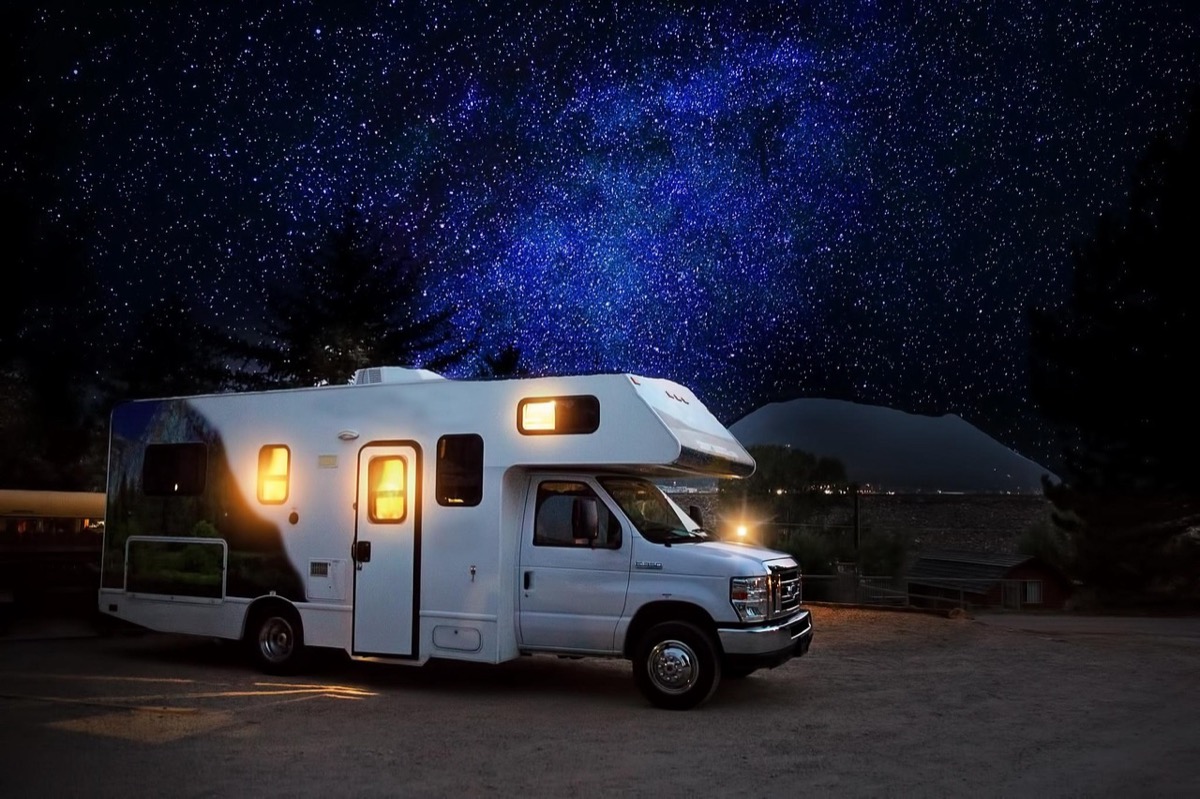
Tent campers need the quietest possible generator positioned well away from the sleeping area, or a battery station that can be used safely inside the tent. The Honda EU2200i (48 dB) at 20+ feet is barely audible inside a tent. The Jackery Explorer 1000 V2 is the only option that can be used safely inside the tent itself (no exhaust, no CO risk).
Scenario 3: RV Camping Without Hookups
RV users running CPAP plus air conditioning need the Westinghouse iGen4500DF or equivalent. Running CPAP only without AC, the Honda EU2200i covers full RV overnight needs at a fraction of the weight and fuel cost.
Scenario 4: Extended Off-Grid Use
For camping trips exceeding 3 nights where recharging a battery station is not practical, combine a Honda EU2200i (or WEN equivalent) with the Jackery Explorer 1000 V2. Run the generator during the day to charge the battery, then switch to silent battery power overnight. This eliminates nighttime generator noise while providing unlimited runtime across the full trip.
CO Safety - Non-Negotiable Rules
Every year, generator-related carbon monoxide deaths occur because users run generators too close to sleeping spaces. For any gas generator:
- Never run inside a tent, camper, garage, or any enclosed or semi-enclosed space
- Position at minimum 20 feet from any occupied space
- Point exhaust away from doors, windows, and ventilation openings
- Install a CO detector inside your sleeping space when running any generator nearby
- If you feel dizzy, headachy, or nauseated - shut the generator down and get to fresh air immediately
Frequently Asked Questions
Can I run a CPAP machine on a regular open-frame generator?
Technically yes, but it is not recommended. Open-frame generators produce modified sine wave or dirty power with Total Harmonic Distortion (THD) often exceeding 10 to 25%. CPAP machines contain sensitive microprocessors and pressure-regulation electronics that require clean pure sine wave power under 3% THD. Running a CPAP on dirty power can cause inconsistent pressure delivery, premature motor wear, erratic display behavior, and can void the manufacturer warranty. Always use an inverter generator (under 3% THD) or a battery-based power station with a pure sine wave inverter.
How many watts does a CPAP machine use?
A standard CPAP machine without a heated humidifier draws 30 to 60 watts at normal operating pressure. With the heated humidifier running at maximum heat setting, consumption rises to 100 to 200 watts. BiPAP machines run higher at 40 to 80 watts without humidification. Even at peak humidified draw, a 1800W inverter generator runs your CPAP at roughly 10% of rated capacity, leaving ample power for other overnight needs like a fan, phone charger, or LED lighting.
How long will a generator run my CPAP machine on one tank?
Runtime depends on the generator's fuel capacity and your CPAP draw. The Honda EU2200i runs 8.1 hours at 25% load (450W). A 60W CPAP with humidifier uses roughly 13% of rated capacity, giving you significantly more than 8 hours of theoretical runtime per tank. In practice, the Honda will exceed its rated 8.1-hour figure when running a CPAP as its primary load. The Jackery Explorer 1000 V2 (1070Wh battery) delivers approximately 14 to 17 hours of CPAP runtime without humidification.
Is the Honda EU2200i safe for CPAP machines?
Yes. The Honda EU2200i produces pure sine wave power with THD under 3%, meeting the clean-power requirements of all major CPAP brands including ResMed, Philips Respironics, and Fisher and Paykel. Honda's inverter circuit is consistently rated as safe for medical equipment in clinical assessments. The unit's 48 dB quarter-load noise level also makes it practical for overnight use without disturbing sleep partners or campsite neighbors.
Should I use a battery power station or an inverter generator for my CPAP?
It depends on your situation. Battery power stations like the Jackery Explorer 1000 V2 are completely silent, require no fuel, and are safe to use inside a tent, RV, or bedroom during a power outage. They are ideal for 1 to 3 nights of standalone use. Inverter generators provide unlimited runtime (as long as fuel is available), making them better for extended camping trips, prolonged outages, or powering other devices simultaneously. Many CPAP users buy both: the battery station for normal use and the generator as a backup when the battery depletes.
Can I use a CPAP machine in a tent with a generator?
Yes, but the generator must never be placed inside or immediately adjacent to the tent. Carbon monoxide from generator exhaust is colorless and odorless and has caused fatal poisonings in camping situations. Position the generator at minimum 20 feet from the tent with exhaust pointing away from any occupied space. Run a heavy-duty extension cord rated for your load (12 AWG minimum for runs over 25 feet). Consider a battery power station for tent use instead - it produces no exhaust and can safely operate inside the tent.
The 2026 Verdict: Best Generator for Your CPAP
Best overall: Honda EU2200i - The gold standard. Pure sine wave under 3% THD, 48 dB quiet, 8+ hour runtime, clinically verified safe for all CPAP brands. Costs more but protects a medical device worth far more than the price difference.
Best for silent indoor/tent use: Jackery Explorer 1000 V2 - Zero noise, zero exhaust, 14+ hours CPAP runtime per charge. The only option safe to use inside an enclosed sleeping space.
Best budget gas generator: WEN 56225i - 53 dB, under 1.2% THD, 10+ hours runtime, fuel shutoff for storage. Delivers Honda-level power quality at 60% of the cost.
Best for ultra-light camping: WEN 56200i - The lightest practical gas option. 51 dB, sub-1.2% THD, 9+ hours per gallon. Minimum viable gas generator for CPAP-only load.
Best for full RV use: Westinghouse iGen4500DF - 3700W rated dual-fuel inverter handles CPAP plus AC plus appliances simultaneously. 52 dB quiet, 18-hour runtime, remote start.
For most CPAP users, the choice comes down to Honda EU2200i (best reliability and noise) vs Jackery Explorer 1000 V2 (best silence and indoor safety). Both are genuinely excellent solutions for different situations. The WEN options represent strong value for budget-conscious buyers who prioritize pure power quality over long-term engine durability.
For more generator buying guidance, see Quietest Inverter Generator Under 70dB, Best 5000W RV Generator Under $2000, and EcoFlow DELTA Pro vs Jackery: Home Backup Showdown.
Affiliate Disclosure: GeneratorIntel participates in the Amazon Services LLC Associates Program, an affiliate advertising program designed to provide a means for sites to earn commissions by linking to Amazon.com. We earn commissions from qualifying purchases made through our Amazon links at no additional cost to you. These commissions support our research, testing, and content creation. We recommend products based on specifications, performance, and value, not commission rates.
The Silent CPAP Companion: Jackery Explorer 1000 V2
The Jackery Explorer 1000 V2 is not a generator; instead, it's a battery-powered station equipped with a 1070Wh LiFePO4 battery and a 1500W pure sine wave inverter. For CPAP users, this difference is crucial:
- Mute Operation - No engine noise means it can operate quietly inside a tent, bedroom, or RV.
- No Emissions - Eliminates carbon monoxide risk, making it safe for use in enclosed areas like tents.
- Fuel-Free Operation - Can be charged at home or with solar panels without the need for fuel storage or stabilizers.
- Clean Power Output - Provides a pure sine wave with an AC output of 1500W, matching grid-quality electricity.
CPAP Usage Time Calculations:
- Without Humidifier (average 50W): 1070Wh / 50W = over 21 hours (with 85% inverter efficiency: about 18 hours)
- With Medium Humidifier Setting (average 100W): 1070Wh / 100W x 0.85 ≈ around 9 hours
- With Maximum Humidifier Setting (average 180W): 1070Wh / 180W x 0.85 ≈ about 5 hours
This device is sufficient for two full nights of CPAP use without humidification, which is common during camping trips. With the humidifier set to medium, it comfortably powers one night with some battery remaining.
Main Features:
- Battery Capacity: 1070Wh LiFePO4 (lithium iron phosphate)
- AC Output: 1500W continuous, 3000W peak
- Waveform Type: Pure sine wave
- Noise Level: Silent (no moving parts)
- Recharge Time: One hour from a wall outlet (fast charge), 9-10 hours using a 200W solar panel
- Weight: 23.8 pounds
- Battery Lifespan: Over 4000 cycles to 80% capacity
Suitable Users: This unit is ideal for CPAP users needing backup during short power outages (1-2 days), campers without electrical hookups, and RV owners seeking silent overnight operation. It can be recharged using solar panels (sold separately) for extended off-grid usage.
Note: The Explorer 1000 V2 has limited energy capacity; for outages lasting more than two days or multi-night camping excursions, consider a generator for recharging or having additional battery units on hand. Plan your power supply accordingly.
Affordable Inverter Generators: WEN 56225i and WEN 56200i
WEN manufactures two compact inverter generators that are cost-effective alternatives to Honda models for CPAP users. Both have a total harmonic distortion (THD) of under 1.2%, offering even cleaner power than the Honda EU2200i, and can be used quietly during overnight hours.
WEN 56225i - Rated at 2250W/1800W
The WEN 56225i provides the same 1800W of rated output as the Honda EU2200i but at a price that's approximately 60% less. It operates at 53 dB when running at one-quarter load, which is 5 dB louder than the Honda model – still quiet enough for camping and reasonably acceptable for overnight use if placed away from sleeping areas.
Main Features:
- Maximum Power Output: 2250W start / 1800W continuous
- Total Harmonic Distortion (THD): Less than 1.2% (often cleaner than the local power grid)
- Noise Level: 53 dB at one-quarter load
- Operating Time: Up to 10.5 hours at a quarter load with a 1-gallon fuel tank
- Engine Type: WEN 79cc 4-stroke OHV
- Weight: Weighs in at 39 pounds (lighter than its Honda counterpart)
- Guarantee: Comes with a two-year warranty
The WEN 56225i comes equipped with a fuel shut-off valve that empties the carburetor before storage, which is particularly beneficial for those using it as an emergency backup generator for CPAP machines. With infrequent use, this feature helps prevent the common issue of gummed-up carburetors.
WEN 56200i - Rated at 2000W/1600W
The WEN 56200i offers a rated output of 1600W and a peak power of 2000W, making it the lightest option at only 48 pounds. It has a noise rating of 51 dB when running at quarter load, matching the Honda's level, and provides cleaner power with less than 1.2% THD.
For those needing to run just a CPAP machine (no other loads), the 1600W rated output is more than sufficient, as a typical CPAP consumes only 3-12% of available capacity. The WEN 56200i is ideal for campers who need minimal generator size and weight, such as backpackers or motorcycle travelers.
Main Features:
- Maximum Power Output: 2000W start / 1600W continuous
- Total Harmonic Distortion (THD): Less than 1.2%
- Noise Level: 51 dB at one-quarter load
- Operating Time: Approximately 9.4 hours at a quarter load with a 1-gallon fuel tank
- Engine Type: WEN 79.7cc 4-stroke OHV
- Weight: Weighs in at 48 pounds
- Guarantee: Comes with a two-year warranty
WEN vs Honda Buyers: Ideal for campers who use their CPAP generator less than 20 nights annually, those primarily concerned about power outage backup rather than extended camping, and cost-conscious shoppers looking for reliable inverter technology without the premium pricing that comes with Honda's robust engine durability and dealer support.
The Westinghouse iGen4500DF: Ideal for RVs with Full Load Demands
Maintaining a CPAP device typically doesn't necessitate a 3700W generator. However, if you're simultaneously operating an RV equipped with an air conditioner, refrigerator, water pump, television, and a CPAP machine, the Westinghouse iGen4500DF ensures all these devices run smoothly from one inverter unit without compromising CPAP-safe power quality.
Main features:
- Max output: 4500W start / 3700W continuous (gasoline) | 4050W / 3330W (propane)
- Total Harmonic Distortion (THD): Less than 3% (pure sine wave inverter)
- Noise: 52 dB at low load
- Operating time: Up to 18 hours with a 25% load (using a 3.4-gallon tank)
- Ignition methods: Key fob remote, push-button electric start, manual pull cord
- Fuels accepted: Gasoline or propane (dual-fuel capability)
- Gross weight: 104.7 pounds
The iGen4500DF can manage the power surge from a 13,500 BTU RV air conditioner (usually between 2800 to 3500W) along with running a CPAP device, refrigerator, and lighting - tasks that would exceed the capacity of an 1800W inverter. A remote key fob allows for starting the generator from inside your RV or tent without leaving.
Target buyers: This product is best suited for RV owners needing one generator to manage both CPAP medical power demands and high-wattage appliances simultaneously. Not ideal for tent campers or those who only require CPAP support, as its size (104.7 pounds) and capability far exceed the requirements of a single device.
Selecting Your Generator: Tailored to Your CPAP Needs
Case 1: Home Backup Only
If your sole requirement is ensuring CPAP power during home outages (not camping), opt for a battery-powered station such as the Jackery Explorer 1000 V2. It maintains full charge indefinitely (recharge every 3 to 6 months for LiFePO4 battery health), operates silently, and requires no fuel. Keep it plugged in as a standby - when the power goes out, switch over immediately.
Case 2: Tent Camping
Tent campers should prioritize the quietest generator possible, placed far from sleeping areas, or use a battery station safe for indoor tent usage. The Honda EU2200i (48 dB) is nearly silent at over 20 feet away inside a tent. For indoor safety, only the Jackery Explorer 1000 V2 can be used within a tent due to its lack of exhaust and CO risk.
Case 3: RV Camping Without Hookups
For RV users needing CPAP along with air conditioning, the Westinghouse iGen4500DF or similar is necessary. If only using CPAP without AC, the Honda EU2200i suffices for full RV overnight needs at a lighter weight and lower fuel cost.
Case 4: Long-Term Off-Grid Camping
To handle trips longer than three nights where battery station recharging isn't feasible, pair a Honda EU2200i (or WEN equivalent) with the Jackery Explorer 1000 V2. Use the generator during daylight to charge your battery, then switch to silent battery power at night. This setup removes nighttime noise while providing continuous runtime throughout your trip.
Safety Precautions Against CO Poisoning
The misuse of gas generators, particularly when placed too close to sleeping areas, results in numerous carbon monoxide fatalities annually. To ensure safety with any generator fueled by gas:
- Avoid operating it within a tent, vehicle, garage, or similar confined spaces.
- Ensure the generator is at least 20 feet away from all occupied zones.
- Direct exhaust fumes away from doors, windows, and ventilation openings.
- Incorporate a CO detector in your sleeping area when operating any nearby generators.
- If you experience dizziness, headaches, or nausea, immediately cease generator use and move to an area with fresh air.
Common Queries
Is it safe to use a regular open-frame generator with my CPAP machine?
While technically feasible, using an open-frame generator is not advised. These generators emit modified sine wave or "dirty power," often with THD levels exceeding 10 to 25%. CPAP machines require clean pure sine wave power (THD under 3%) due to their sensitive electronic components and pressure-regulation mechanisms. Operating a CPAP on dirty power can lead to inconsistent pressure, accelerated motor wear, erratic display issues, and void the manufacturer's warranty. Use an inverter generator or battery-based system with a pure sine wave inverter instead.
What is the wattage requirement for a CPAP machine?
A typical CPAP device consumes 30 to 60 watts at standard pressure levels without a heated humidifier. With a fully operational heated humidifier, power consumption can increase to between 100 and 200 watts. BiPAP devices consume more energy, typically ranging from 40 to 80 watts when not using humidification. At maximum settings, even with a CPAP's peak draw, an 1800W inverter generator will be running at about 10% of its capacity, leaving plenty of power for other overnight essentials like charging devices or lighting.
How long can a generator sustain my CPAP machine?
The duration varies depending on the fuel tank size and your CPAP's power usage. The Honda EU2200i provides 8.1 hours at 25% load (450W). With a 60W CPAP device including humidification, you're using about 13% of its capacity, which should extend the runtime significantly beyond the stated figure. In practical use, the Honda EU2200i often surpasses its rated runtime when primarily powering a CPAP machine. The Jackery Explorer 1000 V2 (with a 1070Wh battery) offers approximately 14 to 17 hours of operation for a CPAP without humidification.
Can the Honda EU2200i be safely used with CPAP machines?
Absolutely. The Honda EU2200i provides pure sine wave power with THD below 3%, meeting the clean-power standards required by major CPAP manufacturers such as ResMed, Philips Respironics, and Fisher & Paykel. It has been rated safe for medical devices in clinical evaluations due to its consistent inverter circuit performance. The model's noise level (48 dB at quarter-load) makes it suitable for overnight use without disturbing nearby sleepers or campsite neighbors.
Is a battery power station or an inverter generator better suited for my CPAP?
The choice depends on your specific needs. For instance, devices such as the Jackery Explorer 1000 V2 offer silent operation, do not require fuel, and can be safely used inside environments like tents, RVs, or bedrooms during power outages. They are perfect for short durations of up to three nights without an external power source. In contrast, inverter generators supply continuous power as long as there is a fuel supply, which makes them more suitable for longer camping trips, extended power failures, or when powering multiple devices at once. Many CPAP users opt to have both: using the battery station for regular use and keeping the generator on standby for backup purposes when the battery runs low.
Is it safe to operate a CPAP machine in a tent with a generator?
It is feasible, but safety measures are critical. The generator should be positioned outside of the tent and at least 20 feet away from it, ensuring that its exhaust does not point towards any occupied area. Carbon monoxide emitted by generators can be lethal without proper ventilation as it is both colorless and odorless, leading to severe poisoning incidents in camping scenarios. For extended runs over 25 feet, a heavy-duty extension cord rated for your CPAP's power requirements (minimum of 12 AWG) should be used. Alternatively, consider using a battery power station for tent use, as it emits no exhaust and can operate safely within the confines of your tent.
The Verdict for 2026: Top Generator Picks for CPAP Users
Top Choice: Honda EU2200i - A premium option. Offers a pure sine wave with less than 3% THD, operates at under 48 dB, and provides over 8 hours of runtime. It's clinically proven to be safe for all CPAP devices. Although it’s more expensive, its cost is justified by the protection it offers for a critical medical device.
Quietest Indoors: Jackery Explorer 1000 V2 - This model is virtually silent and emission-free, ensuring over 14 hours of continuous operation for CPAP devices. It's the only generator designed to be used safely inside enclosed spaces.
Budget-Friendly Gas Generator: WEN 56225i - Running at just under 53 dB, with less than 1.2% THD, it offers over 10 hours of runtime and includes a fuel shutoff for storage safety. This generator delivers top-tier power quality at approximately 60% the cost of Honda models.
Lightweight Camping Generator: WEN 56200i - The lightest practical gas generator available. It operates at under 51 dB, has less than 1.2% THD, and provides over 9 hours of runtime per gallon. This is the minimum viable option for CPAP users looking to minimize weight.
Rugged RV Use: Westinghouse iGen4500DF - A dual-fuel inverter generator with a 3700W capacity, suitable for powering CPAP devices along with air conditioning and appliances simultaneously. It operates quietly at under 52 dB, has an 18-hour runtime, and comes with remote start functionality.
For the majority of CPAP users, the decision often narrows down to choosing between the Honda EU2200i (for superior reliability and noise control) or the Jackery Explorer 1000 V2 (for unparalleled silence and indoor safety). Both models offer excellent performance tailored for different scenarios. The WEN generators stand out as cost-effective options that prioritize power quality over long-term engine longevity.
For additional insights into generator selection, explore our articles on the Quietest Inverter Generator Under 70dB, Best 5000W RV Generators for Less Than
Affiliate Disclosure: GeneratorIntel participates in the Amazon Services LLC Associates Program. We earn commissions from qualifying purchases through our Amazon links at no extra cost to you. We recommend products based on specifications, performance, and value, not commission rates. Running a CPAP machine off a generator is not as simple as plugging into any available outlet. CPAP machines contain precision microprocessors and pressure regulators that require pure sine wave power - the same clean electrical signal you get from a wall outlet at home. Plug into a conventional open-frame generator producing dirty modified sine wave power, and you risk inconsistent pressure delivery, motor degradation, and a voided manufacturer warranty. The solution is an inverter generator, which produces Total Harmonic Distortion (THD) under 3% - equivalent to grid power. Combined with quiet operation (most CPAP users need the generator running while they sleep), inverter models are the only appropriate generator class for sleep apnea equipment. This guide covers four verified options for 2026, ranging from a silent battery power station ideal for tent camping to a dual-fuel inverter generator that can power your entire RV overnight. Every recommendation produces pure sine wave power verified safe for CPAP, BiPAP, and APAP machines. Before buying a generator, understand exactly what your CPAP machine draws: Your CPAP's power adapter label shows the maximum input wattage. Most modern ResMed AirSense 11 units list 90W maximum. The Philips DreamStation 2 lists 65W. These are peak figures - actual operating draw is typically 30 to 50% lower during a normal sleep night. For a full 8-hour sleep night, budget this calculation: (average wattage) x 8 hours = minimum watt-hours needed. A 60W CPAP with humidifier needs roughly 480Wh to run through the night. The Jackery Explorer 1000 V2 holds 1070Wh - enough for two full nights plus a buffer. CPAP machines are microprocessor-controlled medical devices. They monitor pressure, adjust flow rates, and track therapy data on internal circuits that require stable, clean electrical input. Total Harmonic Distortion (THD) is the measure of power quality: Open-frame conventional generators produce 6 to 25% THD. Every inverter generator in this guide produces under 3% THD, matching what your CPAP was designed to run on. A common mistake is buying a 3500W generator to run a 60W CPAP. Oversizing wastes fuel, adds unnecessary weight and noise, and provides no benefit for a device that draws minimal wattage. The right sizing targets: The 1800W class (Honda EU2200i, WEN 56225i) represents the ideal balance for most CPAP users: enough capacity to run CPAP plus normal overnight accessories without the bulk, noise, or fuel consumption of larger units. The 1600W WEN 56200i is the lightest practical option for backpackers who need minimal load power. The Honda EU2200i is the generator CPAP clinicians and respiratory therapists recommend by name when patients ask about overnight backup power. Three reasons justify that reputation: Power quality: The EU2200i produces under 3% THD through Honda's proprietary inverter circuit. This matches grid power exactly. Multiple published clinical assessments have verified the EU2200i as safe for all major CPAP brands including ResMed, Philips Respironics, Fisher and Paykel, and DeVilbiss. Noise: At 48 dB at quarter load, the EU2200i runs quieter than a refrigerator. A 60W CPAP uses roughly 3.3% of rated capacity, meaning the EU2200i idles at very low output all night - near its quietest operating point. Campsite neighbors or sleeping partners in the same room are unlikely to be disturbed. Runtime: Honda rates the EU2200i at 8.1 hours at 25% load (450W). Running a CPAP at 60 to 100W represents 3 to 5% of rated capacity - well below the 25% load benchmark. Expect 10 to 12 hours of actual runtime per tank when the CPAP is the primary load. Key specifications: Parallel capability: Two EU2200i units can be connected using Honda's optional parallel cable to produce 3600W rated output. This gives you CPAP plus RV air conditioning from two quiet, portable units instead of one large loud conventional generator. Who should buy it: CPAP users who camp 10+ nights per year, anyone with a prolonged power-outage risk (severe weather regions, rural areas with unreliable grid), or anyone whose CPAP therapy is non-negotiable and who cannot risk equipment damage from inferior power quality. The EU2200i costs more than budget alternatives but protects a medical device that costs $700 to $2,000 to replace. The Jackery Explorer 1000 V2 is not a generator - it is a 1070Wh LiFePO4 battery power station with a 1500W pure sine wave inverter. For CPAP users, this distinction matters significantly: CPAP runtime math: For most CPAP users running without humidification (common when camping), the Explorer 1000 V2 covers two full 8-hour sleep nights on a single charge. With a humidifier at medium setting, one full night is comfortable with capacity remaining. Key specifications: Who should buy it: CPAP users who primarily need backup for home power outages (under 1 to 2 days), campers who use tent sites without hookups, RV users who want silent overnight power without running a generator. The battery can recharge from solar panels (sold separately) for extended off-grid stays. Limitation: The Explorer 1000 V2 is a finite energy source. For outages exceeding 2 days or camping trips longer than a few nights, you need either a generator to recharge it or multiple battery units. Plan accordingly. WEN produces two compact inverter generators that work well for CPAP use at significantly lower cost than Honda. Both produce under 1.2% THD - actually cleaner power output than the Honda EU2200i - and operate quietly enough for overnight use. The WEN 56225i matches the Honda EU2200i's 1800W rated output while selling for roughly 60% of Honda's price. At 53 dB at quarter load, it runs 5 dB louder than the Honda - audible but still within campground noise limits and tolerable for overnight use when positioned at a distance from the sleeping area. Key specifications: The WEN 56225i includes a fuel shutoff valve that drains the carburetor before storage. This is a practical advantage for CPAP backup generators that spend most of the year in a closet waiting for an outage - empty carburetors do not gum up, eliminating the most common failure mode for infrequently used small engines. The WEN 56200i steps down to 1600W rated output and 2000W peak, making it the lightest practical gas generator option at 48 pounds. Its 51 dB noise rating matches the Honda's quarter-load figure, and its sub-1.2% THD provides cleaner power than Honda's inverter circuit. For CPAP-only use (no simultaneous loads), the 1600W rated output is more than adequate - a CPAP draws 3 to 12% of available capacity. The WEN 56200i makes sense for backpackers or motorcycle campers who need the minimum viable generator footprint and weight. Key specifications: Who should buy WEN over Honda: Campers who use their CPAP generator fewer than 20 nights per year, anyone primarily concerned with power outage backup rather than extended camping use, and budget-conscious buyers who want proven inverter performance without paying for Honda's premium engine longevity and dealer support network. Most CPAP users do not need a 3700W generator. But if you are running an RV with an air conditioner, refrigerator, water pump, television, and a CPAP machine simultaneously, the Westinghouse iGen4500DF solves all of it from a single inverter unit while maintaining CPAP-safe power quality. Key specifications: The iGen4500DF handles a 13,500 BTU RV air conditioner startup surge (typically 2800 to 3500W) while simultaneously powering a CPAP, refrigerator, and lights - loads that would overwhelm a 1800W inverter. Remote start via key fob means you can fire it up from inside the RV or tent without stepping outside. Who should buy it: RV owners who need a single generator to handle both CPAP medical power requirements and high-wattage appliances. Not recommended for tent campers or anyone who only needs CPAP power - the weight (104.7 pounds) and capacity far exceed single-device CPAP needs. If you only need CPAP backup during grid outages (not camping), a battery power station like the Jackery Explorer 1000 V2 is the best choice. It stores fully charged indefinitely (recharge every 3 to 6 months to maintain LiFePO4 health), produces zero noise, and uses zero fuel. Keep it plugged in as a UPS-style backup - when power cuts out, switch to battery immediately. Tent campers need the quietest possible generator positioned well away from the sleeping area, or a battery station that can be used safely inside the tent. The Honda EU2200i (48 dB) at 20+ feet is barely audible inside a tent. The Jackery Explorer 1000 V2 is the only option that can be used safely inside the tent itself (no exhaust, no CO risk). RV users running CPAP plus air conditioning need the Westinghouse iGen4500DF or equivalent. Running CPAP only without AC, the Honda EU2200i covers full RV overnight needs at a fraction of the weight and fuel cost. For camping trips exceeding 3 nights where recharging a battery station is not practical, combine a Honda EU2200i (or WEN equivalent) with the Jackery Explorer 1000 V2. Run the generator during the day to charge the battery, then switch to silent battery power overnight. This eliminates nighttime generator noise while providing unlimited runtime across the full trip. Every year, generator-related carbon monoxide deaths occur because users run generators too close to sleeping spaces. For any gas generator: Technically yes, but it is not recommended. Open-frame generators produce modified sine wave or dirty power with Total Harmonic Distortion (THD) often exceeding 10 to 25%. CPAP machines contain sensitive microprocessors and pressure-regulation electronics that require clean pure sine wave power under 3% THD. Running a CPAP on dirty power can cause inconsistent pressure delivery, premature motor wear, erratic display behavior, and can void the manufacturer warranty. Always use an inverter generator (under 3% THD) or a battery-based power station with a pure sine wave inverter. A standard CPAP machine without a heated humidifier draws 30 to 60 watts at normal operating pressure. With the heated humidifier running at maximum heat setting, consumption rises to 100 to 200 watts. BiPAP machines run higher at 40 to 80 watts without humidification. Even at peak humidified draw, a 1800W inverter generator runs your CPAP at roughly 10% of rated capacity, leaving ample power for other overnight needs like a fan, phone charger, or LED lighting. Runtime depends on the generator's fuel capacity and your CPAP draw. The Honda EU2200i runs 8.1 hours at 25% load (450W). A 60W CPAP with humidifier uses roughly 13% of rated capacity, giving you significantly more than 8 hours of theoretical runtime per tank. In practice, the Honda will exceed its rated 8.1-hour figure when running a CPAP as its primary load. The Jackery Explorer 1000 V2 (1070Wh battery) delivers approximately 14 to 17 hours of CPAP runtime without humidification. Yes. The Honda EU2200i produces pure sine wave power with THD under 3%, meeting the clean-power requirements of all major CPAP brands including ResMed, Philips Respironics, and Fisher and Paykel. Honda's inverter circuit is consistently rated as safe for medical equipment in clinical assessments. The unit's 48 dB quarter-load noise level also makes it practical for overnight use without disturbing sleep partners or campsite neighbors. It depends on your situation. Battery power stations like the Jackery Explorer 1000 V2 are completely silent, require no fuel, and are safe to use inside a tent, RV, or bedroom during a power outage. They are ideal for 1 to 3 nights of standalone use. Inverter generators provide unlimited runtime (as long as fuel is available), making them better for extended camping trips, prolonged outages, or powering other devices simultaneously. Many CPAP users buy both: the battery station for normal use and the generator as a backup when the battery depletes. Yes, but the generator must never be placed inside or immediately adjacent to the tent. Carbon monoxide from generator exhaust is colorless and odorless and has caused fatal poisonings in camping situations. Position the generator at minimum 20 feet from the tent with exhaust pointing away from any occupied space. Run a heavy-duty extension cord rated for your load (12 AWG minimum for runs over 25 feet). Consider a battery power station for tent use instead - it produces no exhaust and can safely operate inside the tent. Best overall: Honda EU2200i - The gold standard. Pure sine wave under 3% THD, 48 dB quiet, 8+ hour runtime, clinically verified safe for all CPAP brands. Costs more but protects a medical device worth far more than the price difference. Best for silent indoor/tent use: Jackery Explorer 1000 V2 - Zero noise, zero exhaust, 14+ hours CPAP runtime per charge. The only option safe to use inside an enclosed sleeping space. Best budget gas generator: WEN 56225i - 53 dB, under 1.2% THD, 10+ hours runtime, fuel shutoff for storage. Delivers Honda-level power quality at 60% of the cost. Best for ultra-light camping: WEN 56200i - The lightest practical gas option. 51 dB, sub-1.2% THD, 9+ hours per gallon. Minimum viable gas generator for CPAP-only load. Best for full RV use: Westinghouse iGen4500DF - 3700W rated dual-fuel inverter handles CPAP plus AC plus appliances simultaneously. 52 dB quiet, 18-hour runtime, remote start. For most CPAP users, the choice comes down to Honda EU2200i (best reliability and noise) vs Jackery Explorer 1000 V2 (best silence and indoor safety). Both are genuinely excellent solutions for different situations. The WEN options represent strong value for budget-conscious buyers who prioritize pure power quality over long-term engine durability. For more generator buying guidance, see Quietest Inverter Generator Under 70dB, Best 5000W RV Generator Under $2000, and EcoFlow DELTA Pro vs Jackery: Home Backup Showdown. Affiliate Disclosure: GeneratorIntel participates in the Amazon Services LLC Associates Program, an affiliate advertising program designed to provide a means for sites to earn commissions by linking to Amazon.com. We earn commissions from qualifying purchases made through our Amazon links at no additional cost to you. These commissions support our research, testing, and content creation. We recommend products based on specifications, performance, and value, not commission rates.
Best Portable Generator for CPAP Machine: Silent & Reliable
Quick Picks: Best CPAP Generators 2026
Model
Type
Power Output
Noise Level
CPAP Runtime
Best For
Honda EU2200i
Inverter Generator
1800W rated
48 dB
8+ hours per tank
Best overall, camping, outages
Jackery Explorer 1000 V2
Battery Power Station
1500W AC
Silent
14-17 hours
Indoor use, tent camping, silent operation
WEN 56225i
Inverter Generator
1800W rated
53 dB
10+ hours per tank
Budget pick, occasional use
WEN 56200i
Inverter Generator
1600W rated
51 dB
9+ hours per tank
Lightest gas option, minimal load
Westinghouse iGen4500DF
Dual-Fuel Inverter
3700W rated
52 dB
18+ hours per tank
RV use, CPAP plus full load
CPAP Power Needs: What the Specs Actually Mean
Why Inverter Power Matters for CPAP
Minimum Wattage: Do Not Overbuy
Honda EU2200i: The CPAP Gold Standard
Jackery Explorer 1000 V2: The Silent CPAP Option
WEN 56225i and WEN 56200i: Budget Inverter Options
WEN 56225i - 2250W/1800W Rated
WEN 56200i - 2000W/1600W Rated
Westinghouse iGen4500DF: For RV Users Running Full Loads
How to Choose: The Right Generator for Your CPAP Situation
Scenario 1: Home Power Outages Only
Scenario 2: Tent Camping
Scenario 3: RV Camping Without Hookups
Scenario 4: Extended Off-Grid Use
CO Safety - Non-Negotiable Rules
Frequently Asked Questions
Can I run a CPAP machine on a regular open-frame generator?
How many watts does a CPAP machine use?
How long will a generator run my CPAP machine on one tank?
Is the Honda EU2200i safe for CPAP machines?
Should I use a battery power station or an inverter generator for my CPAP?
Can I use a CPAP machine in a tent with a generator?
The 2026 Verdict: Best Generator for Your CPAP
Affiliate Disclosure: GeneratorIntel is part of the Amazon Services LLC Associates Program, an affiliate advertising initiative that allows us to earn commissions from linking to products on Amazon.com. We receive these commissions for qualifying purchases made through our links without any extra cost to you. These earnings support our ongoing research, testing, and content creation efforts. Our recommendations are based on product specifications, performance, and value proposition, not the commission rates.