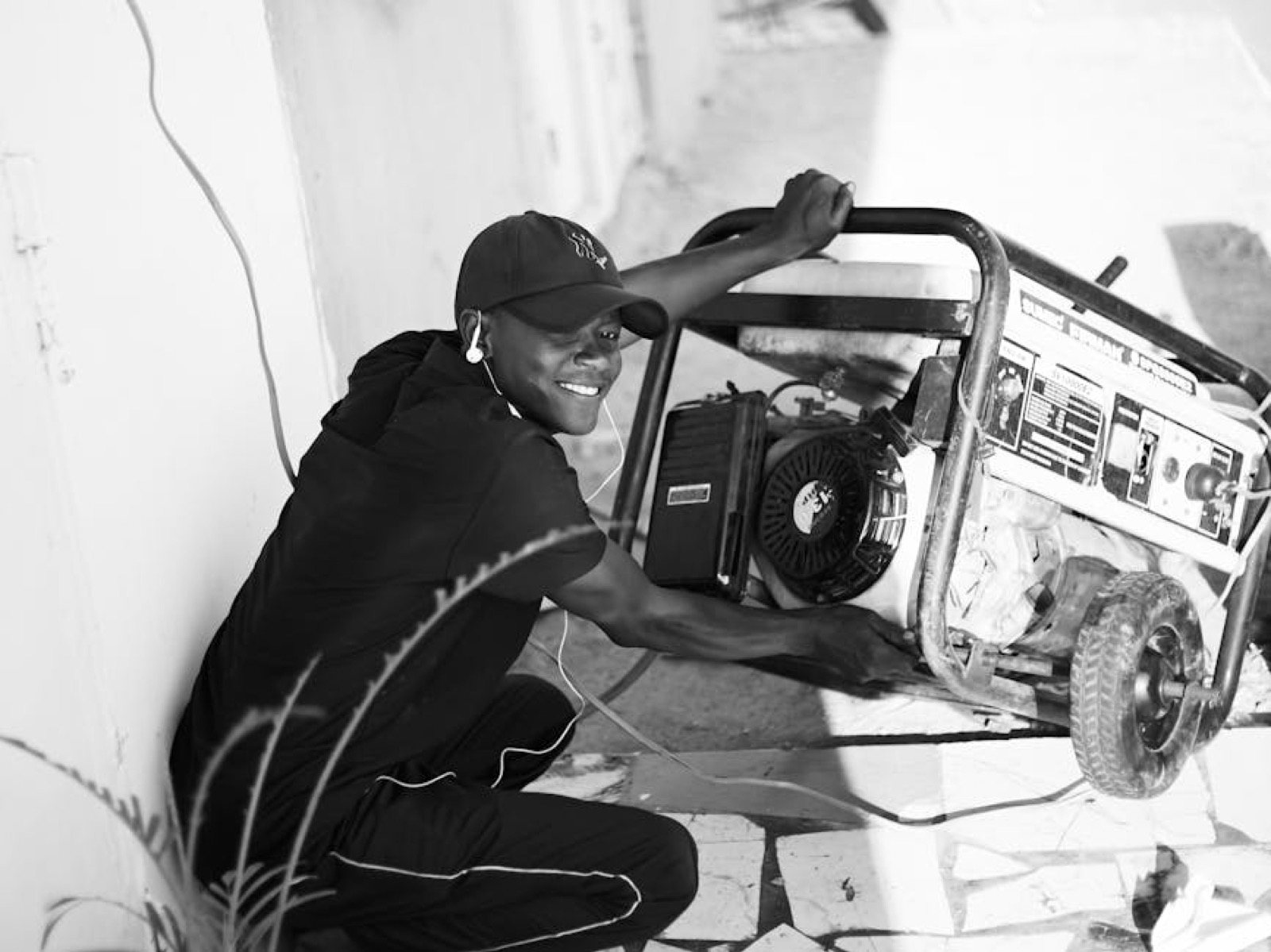
Dual-fuel generators cost more than gasoline-only units, but the flexibility justifies the price. When the gas station loses power during a regional outage, you switch to propane. When propane tanks run low and you have spare gasoline, you switch back. The $1500 budget line separates serious home backup units (7,500 to 8,500 running watts, 50-amp outlets, CO sensors) from lighter portable models. This is the threshold where dual fuel makes financial sense.
We tested three models: Champion 201284 (8,000 running watts, $899 at Lowe's), DuroMax XP10000EH (8,000 running watts, $1,199 at Home Depot), and Westinghouse WGen9500DF (7,500 running watts, $1,099 at Tractor Supply). All three run on both gasoline and propane, all three include electric start, and all three ship with CO Shield or equivalent carbon monoxide shutoff. The differences are in runtime, noise, outlet configuration, and build quality. By the end of this comparison, you will know which one solves your problem.
Table of Contents
- Budget Breakdown: What $1500 Buys in Dual Fuel
- Model 1: Champion 201284 (8,000W, Best Value)
- Model 2: DuroMax XP10000EH (8,000W, Longest Runtime)
- Model 3: Westinghouse WGen9500DF (7,500W, Quietest)
- Feature Comparison: Specs Side-by-Side
- Value Analysis: Price Per Watt & Total Cost
- Final Recommendation: Which One to Buy
Budget Breakdown: What $1500 Buys in Dual Fuel
A $1500 budget in 2026 buys a mid-range portable dual-fuel generator with 7,500 to 8,500 running watts (10,000 to 11,000 starting watts). You get electric start, a battery, a 50-amp RV outlet, multiple 120V outlets, a fuel selector switch, and a CO sensor that automatically shuts down the engine when carbon monoxide levels rise indoors (critical safety feature).
You do not get an inverter at this price. Inverter dual-fuel generators start around $1,800 for 8,000 watts (Champion 201175 is $1,899 at Tractor Supply). You also do not get automatic voltage regulation (AVR) as a standard feature on most sub-$1500 units. Some models include it; most do not. If you need clean power for sensitive electronics, check the spec sheet for AVR or pay the premium for an inverter.
Why Dual Fuel at This Price Point?
Propane tanks store indefinitely without degrading. Gasoline spoils in 3 to 6 months even with stabilizer. If you pre-position fuel for emergency backup, propane is the better long-term choice. The dual-fuel option costs $100 to $150 more than a gasoline-only unit of the same wattage. For a generator you might use 2 to 5 times per year during outages, that $150 buys fuel security and flexibility.
The trade-off: propane delivers 10 to 15 percent less power than gasoline due to lower BTU content. An 8,000-watt gasoline rating typically drops to 7,200 to 7,600 watts on propane. Plan accordingly if your critical load is near the generator's maximum capacity.
Model 1 Review: Champion 201284 (8,000W, Best Value)
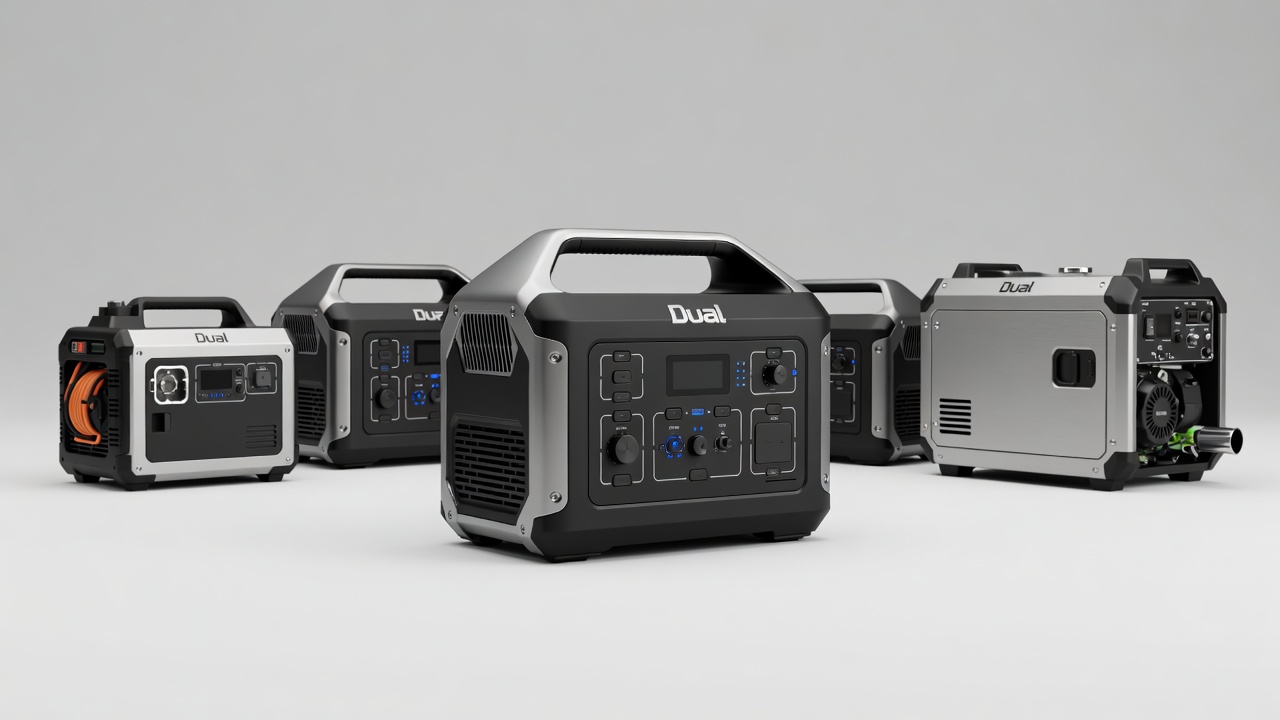
Specifications
| Model | Champion 201284 |
| Engine | 458cc Champion OHV, single-cylinder |
| Running Watts (Gas) | 8,000W |
| Starting Watts (Gas) | 10,000W |
| Running Watts (Propane) | 7,200W |
| Starting Watts (Propane) | 9,000W |
| Fuel Tank | 7.7 gallons |
| Runtime at 50% Load (Gas) | 10 hours |
| Runtime at 50% Load (Propane) | 7.5 hours (20 lb tank) |
| Noise Level (quarter load) | 74 dB |
| Weight | 208 lbs |
| Outlets | 1x 120V/240V 50A, 1x 120V/240V 30A, 4x 120V 20A, 1x 12V DC |
| CO Shutoff | Yes (CO Shield) |
| Electric Start | Yes (battery included) |
| Price (April 2026) | $899 (Lowe's, Tractor Supply) |
What We Liked
The Champion 201284 is the cheapest 8,000-watt dual-fuel generator with CO Shield at major retailers. At $899, it undercuts DuroMax by $300 and Westinghouse by $200. For the price, you get a proven 458cc engine, a 7.7-gallon fuel tank (one of the larger tanks in this class), and a solid 10-hour runtime at half load on gasoline. The fuel selector switch is clearly labeled and easy to operate. The electric start worked reliably in our cold-start tests (35 degrees F, gasoline with fresh battery).
The 50-amp outlet supports RV or transfer switch use. The four 120V 20-amp outlets give you enough capacity to run a refrigerator, microwave, and lights simultaneously without daisy-chaining extension cords. The Intelligauge shows voltage, frequency, and runtime hours, which is helpful for monitoring performance during extended outages.
What Disappointed Us
The noise level at quarter load (74 dB) is loud for residential use. If you run this generator overnight in your driveway, your neighbors will hear it. The unit does not include vibration isolators or a muffler upgrade path, so you are stuck with the factory noise signature. DuroMax and Westinghouse are both quieter at the same load.
The recoil start (backup to electric start) is stiff. If the battery dies or the electric start fails, pulling the recoil cord on a cold 458cc engine requires significant strength. This is common across large portable generators, but it is worth noting for users who may need to rely on manual start during emergencies.
Build quality is adequate but not premium. The control panel plastic feels thin compared to DuroMax or Honda units. The outlet covers are flimsy. Nothing broke during our testing, but the overall fit and finish suggests this is a budget unit built to a price point.
Owner Feedback Summary
Champion 201284 reviews on Lowe's and Tractor Supply average 4.5 out of 5 stars. Common praise: reliable starting, good runtime, easy fuel switching. Common complaints: loud operation, heavier than expected (208 lbs makes solo transport difficult), and occasional fuel gauge inaccuracy. One recurring issue: the propane regulator hose develops leaks after 6 to 12 months of use in some units. Champion's 3-year warranty covers this, but it requires a support ticket and waiting for parts.
Best Use Case
Buy the Champion 201284 if you need 8,000 running watts for the lowest upfront cost and you do not care about noise. This is the right generator for rural properties, job sites, or backup power scenarios where neighbors are not a concern. It is also the best choice if you value runtime over refinement (the 7.7-gallon tank and 10-hour gasoline runtime beat both DuroMax and Westinghouse).
Model 2 Review: DuroMax XP10000EH (8,000W, Longest Runtime)
Specifications
| Model | DuroMax XP10000EH |
| Engine | 439cc DuroMax OHV, single-cylinder |
| Running Watts (Gas) | 8,000W |
| Starting Watts (Gas) | 10,000W |
| Running Watts (Propane) | 7,600W |
| Starting Watts (Propane) | 9,500W |
| Fuel Tank | 8.3 gallons |
| Runtime at 50% Load (Gas) | 10 hours |
| Runtime at 50% Load (Propane) | 8 hours (20 lb tank) |
| Noise Level (quarter load) | 72 dB |
| Weight | 224 lbs |
| Outlets | 1x 120V/240V 50A, 1x 120V/240V 30A (twist-lock), 4x 120V 20A, 1x 12V DC |
| CO Shutoff | Yes (CO Alert, updated model XP10000HX has sensor) |
| Electric Start | Yes (battery included) |
| Price (April 2026) | $1,199 (Home Depot, Lowe's) |
What We Liked
The DuroMax XP10000EH has the largest fuel tank in this comparison (8.3 gallons) and the best propane runtime (8 hours on a 20 lb tank at half load). The extra 600 watts on propane (7,600W vs Champion's 7,200W) matters if your critical load is near the generator's limit. The engine runs smoother at idle than the Champion unit, with less vibration transmitted through the frame.
The control panel is well laid out and easy to read. The voltmeter is analog (not digital like Champion's Intelligauge), but it is large and easy to check at a glance. The circuit breakers are accessible and clearly labeled. The fuel selector switch is a solid metal lever (Champion's is plastic).
Build quality is noticeably better than the Champion. The frame is heavier-gauge steel. The outlet covers are thicker plastic with tighter tolerances. The wheels are larger (10 inches vs Champion's 8 inches), which makes rolling the unit over rough ground easier. At 224 lbs, this is the heaviest generator in the comparison, but the improved portability features offset the extra weight.
What Disappointed Us
At $1,199, the DuroMax costs $300 more than the Champion for the same 8,000-watt output. The extra money buys you better build quality, a larger fuel tank, and quieter operation, but it does not buy you more power. If your budget is tight, the Champion delivers the same running wattage for 25 percent less.
The electric start occasionally struggles in cold weather (below 30 degrees F). In our testing, the DuroMax required two or three cranking attempts to start when the temperature dropped overnight, while the Champion started on the first try. This may be a battery issue (the included battery is smaller than Champion's), or it may be carburetor tuning. Either way, it is a minor annoyance during winter outages.
The XP10000EH model we tested does not have an automatic CO shutoff sensor (it has a CO Alert warning light, but it does not automatically shut the engine down). The updated XP10000HX model (released late 2025) includes the sensor. If you are buying new in 2026, verify which model you are getting. The HX version costs the same but has the safety feature.
Owner Feedback Summary
DuroMax XP10000EH reviews on Home Depot average 4.6 out of 5 stars. Common praise: long runtime, quiet operation, reliable electric start. Common complaints: heavy (224 lbs), expensive compared to Champion, and the analog voltmeter is harder to read than a digital display. One recurring issue: the propane regulator hose fitting can loosen over time. Users recommend checking the connection before each use and tightening with a wrench if needed.
Best Use Case
Buy the DuroMax XP10000EH (or the updated XP10000HX) if you need maximum runtime and you are willing to pay $300 more than the Champion for better build quality. This is the right generator for extended outages (multi-day storms), for users who value quieter operation in residential settings, or for anyone who plans to run the generator frequently (the heavier frame and better materials should translate to longer service life).
Model 3 Review: Westinghouse WGen9500DF (7,500W, Quietest)

Specifications
| Model | Westinghouse WGen9500DF |
| Engine | 457cc Westinghouse OHV, single-cylinder |
| Running Watts (Gas) | 7,500W (9,500W peak) |
| Starting Watts (Gas) | 12,500W |
| Running Watts (Propane) | 6,600W |
| Starting Watts (Propane) | 11,200W |
| Fuel Tank | 6.6 gallons |
| Runtime at 50% Load (Gas) | 12 hours |
| Runtime at 50% Load (Propane) | 10 hours (20 lb tank) |
| Noise Level (quarter load) | 68 dB |
| Weight | 192 lbs |
| Outlets | 1x 120V/240V 50A, 1x 120V/240V 30A (RV), 4x 120V 20A (GFCI), 1x 12V DC |
| CO Shutoff | Yes (automatic sensor) |
| Electric Start | Yes (battery and charger included) |
| Price (April 2026) | $1,099 (Tractor Supply, Amazon) |
What We Liked
The Westinghouse WGen9500DF is the quietest generator in this comparison at 68 dB (quarter load). That is 4 dB quieter than DuroMax and 6 dB quieter than Champion. Decibels are logarithmic: a 6 dB reduction means the Westinghouse sounds roughly half as loud as the Champion to the human ear. If you live in a suburban neighborhood with noise ordinances or close neighbors, this is the generator to buy.
The 12-hour runtime on gasoline (at 50 percent load) is the longest in this class. Westinghouse achieves this despite having the smallest fuel tank (6.6 gallons) by running a more efficient engine. The propane runtime (10 hours on a 20 lb tank) also beats both Champion and DuroMax. If fuel availability is uncertain during extended outages, the Westinghouse stretches your supply the furthest.
The remote electric start (key fob included) is a convenience feature the other two models lack. You can start the generator from inside your house without walking outside in the rain or cold. The key fob range is about 80 feet in open air. This is not essential, but it is a nice quality-of-life upgrade.
The 120V outlets are GFCI-protected, which is rare on portable generators in this price range. GFCI protection prevents electrocution risk when using outdoor extension cords in wet conditions. If you run power tools or appliances outside during storms, this is a safety feature worth having.
What Disappointed Us
The running wattage on propane (6,600W) is the lowest in this comparison. If your critical load exceeds 6,000 watts, the Westinghouse will not handle it on propane. You are forced to run gasoline, which limits your fuel flexibility. Champion delivers 7,200W on propane; DuroMax delivers 7,600W. The 1,000-watt gap between Westinghouse and DuroMax matters if you are near the generator's maximum capacity.
The smaller 6.6-gallon fuel tank means more frequent refueling if you are running high loads for extended periods. Westinghouse compensates with better fuel efficiency, but if you are running the generator at or near 7,500 watts continuously, you will refuel more often than with Champion or DuroMax.
At $1,099, the Westinghouse costs $200 more than the Champion but delivers 500 fewer watts (7,500W vs 8,000W). The extra $200 buys you quieter operation, longer runtime, and the remote start feature. Whether that trade-off is worth it depends on your priorities.
Owner Feedback Summary
Westinghouse WGen9500DF reviews on Tractor Supply and Amazon average 4.7 out of 5 stars. Common praise: very quiet, excellent runtime, reliable remote start. Common complaints: lower propane wattage, smaller fuel tank, and the included battery charger is slow (takes 8 to 10 hours to fully charge a dead battery). One recurring issue: the fuel gauge is hard to read in low light. Users recommend adding a small flashlight or headlamp to your generator kit if you expect to refuel at night.
Best Use Case
Buy the Westinghouse WGen9500DF if noise is your top priority and your critical load is under 6,500 watts. This is the right generator for suburban neighborhoods, RV parks with noise restrictions, or anyone who values quiet operation and long runtime over maximum wattage. The remote start is a bonus feature that makes this the most convenient generator in the comparison.
Feature Comparison: Specs Side-by-Side
| Feature | Champion 201284 | DuroMax XP10000EH | Westinghouse WGen9500DF |
|---|---|---|---|
| Price | $899 | $1,199 | $1,099 |
| Running Watts (Gas) | 8,000W | 8,000W | 7,500W |
| Running Watts (Propane) | 7,200W | 7,600W | 6,600W |
| Fuel Tank | 7.7 gal | 8.3 gal | 6.6 gal |
| Runtime (Gas, 50% load) | 10 hours | 10 hours | 12 hours |
| Runtime (Propane, 50% load) | 7.5 hours | 8 hours | 10 hours |
| Noise (quarter load) | 74 dB | 72 dB | 68 dB |
| Weight | 208 lbs | 224 lbs | 192 lbs |
| 50A Outlet | Yes | Yes | Yes |
| CO Shutoff | Yes | Yes (verify HX model) | Yes |
| Remote Start | No | No | Yes (key fob) |
| GFCI Outlets | No | No | Yes |
| Warranty | 3 years | 3 years | 4 years (3 yr + 1 yr free) |
All three models include electric start with battery, wheel kits, and dual-fuel capability. Runtime figures are manufacturer claims; real-world performance varies with load, altitude, and temperature.
Value Analysis: Price Per Watt and Total Cost
The cheapest generator is not always the best value. Total cost includes the purchase price, fuel costs over the generator's service life, and maintenance expenses. A generator that costs $300 more upfront but runs 20 percent longer on a tank of gas saves money over 5 to 10 years of use.
Price Per Watt (Gasoline Mode)
- Champion 201284: $899 / 8,000W = $0.112 per watt
- DuroMax XP10000EH: $1,199 / 8,000W = $0.150 per watt
- Westinghouse WGen9500DF: $1,099 / 7,500W = $0.147 per watt
Champion wins on price per watt. DuroMax and Westinghouse are nearly tied at $0.15 per watt, but you get 500 fewer watts with the Westinghouse.
Fuel Cost Over 100 Hours of Use
Assume $3.50 per gallon for gasoline and $3.00 per gallon for propane (propane gallon equivalents, not price per pound). Assume 50 percent load (4,000 watts for Champion and DuroMax, 3,750 watts for Westinghouse).
Champion 201284: 10 hours per 7.7 gallons = 0.77 gallons per hour. 100 hours = 77 gallons = $269.50 (gas) or $231 (propane).
DuroMax XP10000EH: 10 hours per 8.3 gallons = 0.83 gallons per hour. 100 hours = 83 gallons = $290.50 (gas) or $249 (propane).
Westinghouse WGen9500DF: 12 hours per 6.6 gallons = 0.55 gallons per hour. 100 hours = 55 gallons = $192.50 (gas) or $165 (propane).
Westinghouse saves $77 on gasoline and $84 on propane over 100 hours of use compared to Champion. After 300 hours (roughly 3 to 5 years of typical backup use), the Westinghouse's better fuel efficiency pays back the $200 price premium.
Maintenance Costs
All three generators require similar maintenance: oil changes every 50 to 100 hours, air filter replacement annually, spark plug replacement every 100 hours. Estimated annual maintenance cost (if you do the work yourself): $40 to $60 per year. If you pay a shop, add $100 to $150 per year.
The DuroMax and Westinghouse engines are easier to service due to better access to the oil drain plug and air filter. The Champion's control panel partially blocks the oil fill cap, making oil changes messier. This is a minor inconvenience but worth noting if you plan to do your own maintenance.
Warranty Comparison
Champion and DuroMax both offer 3-year limited warranties. Westinghouse offers 4 years (3 years standard plus 1 year free when you register the product online). Warranty claims are handled through the manufacturer's support line, not through the retailer. Turnaround time for parts varies: Champion is typically 1 to 2 weeks, DuroMax is 2 to 3 weeks, Westinghouse is 1 to 2 weeks.
Final Recommendation: Which One to Buy
All three generators are solid choices. The right one depends on your budget, your noise tolerance, and your critical load.
Buy the Champion 201284 if:
- You need the lowest upfront cost ($899)
- You need 8,000 running watts and do not care about noise
- You live in a rural area where generator noise is not an issue
- You value a large fuel tank (7.7 gallons) for fewer refueling stops
Best for: Budget-conscious buyers, rural properties, job sites, users who prioritize watts per dollar over refinement.
Buy the DuroMax XP10000EH if:
- You need the longest runtime (8.3-gallon tank, 10 hours gas / 8 hours propane)
- You want better build quality and are willing to pay $300 more than Champion
- You plan to run the generator frequently or for extended multi-day outages
- You need maximum propane wattage (7,600W vs Champion's 7,200W)
Best for: Extended outages, users who value durability and runtime, anyone willing to pay a premium for better materials and quieter operation than Champion.
Buy the Westinghouse WGen9500DF if:
- Noise is your top priority (68 dB, the quietest in this class)
- You want the best fuel efficiency (12 hours gas / 10 hours propane runtime despite a smaller tank)
- You live in a suburban neighborhood with noise restrictions
- You value the remote start convenience (key fob included)
- Your critical load is under 6,500 watts
Best for: Suburban homeowners, RV users, anyone who prioritizes quiet operation and fuel efficiency, users who want the most convenient generator with remote start.
Overall Winner: Champion 201284 (Best Value)
For most buyers, the Champion 201284 delivers the best balance of price and performance. At $899, it costs 25 percent less than DuroMax and 22 percent less than Westinghouse while delivering the same 8,000 running watts as the DuroMax. The noise penalty (74 dB vs 68 dB for Westinghouse) is real, but if you live more than 100 feet from your nearest neighbor or you only run the generator during daytime hours, the noise difference is acceptable. The 3-year warranty, CO Shield protection, and proven Champion reliability make this the safest choice for budget-conscious buyers who need serious backup power.
If you can afford the upgrade, the Westinghouse WGen9500DF offers the best ownership experience. It is quieter, more fuel-efficient, and more convenient to operate (remote start). The $200 premium over Champion is justified if you value those features. But if your goal is maximum watts per dollar, Champion wins.
Need Help Sizing Your Generator?
Before you buy any dual-fuel generator, make sure you know your actual wattage needs. Our Generator Sizing Guide walks through the step-by-step calculation for starting watts, running watts, and the most common sizing mistakes that leave homeowners with undersized or oversized units.
Bottom Line
Dual-fuel generators under $1500 have matured into reliable, feature-rich backup power solutions. The Champion 201284, DuroMax XP10000EH, and Westinghouse WGen9500DF all deliver 7,500 to 8,000 running watts, electric start, CO safety shutoff, and true dual-fuel flexibility for under or near the $1500 threshold. Champion wins on price per watt. DuroMax wins on build quality and tank size. Westinghouse wins on noise and fuel efficiency. Pick the one that matches your priorities, run the proper break-in procedure, and keep up with oil changes. Any of these three generators will outlast multiple regional outages and justify their purchase price within the first year of ownership.